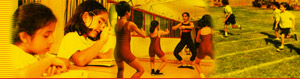
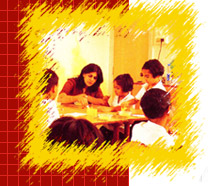
Doing is one of the best ways to learn. This is the philosophy followed by the Billabong High International School (BHIS), Thane. Education at the Primary Level is immensely important as it is here that the foundations of literacy, numeracy and other structures are laid down for future life.
Great learning, great teaching, great fun is what the Primary Section at BHIS, Thane is adhering to. A lot of practical work goes on in the Primary school. Primary classrooms are exciting, inviting places to be.
Our main aim is to :
- Ensure a safer stimulating and intellectually challenging environment for all students.
- Change children’s attitude towards learning.
- Attain skills and attitudes which will fit them for life in a rapidly changing world of a new millennium.
- Realize that we must all take responsibility for our own actions. This realization is fundamental to bringing our students to a preference for self-discipline over imposed discipline.
- Developing a global curriculum with special emphasis on life skills.
CURRICULUM
These methodologies are a departure from the traditional rote learning that is imparted in most schools. While the syllabus for each grade is structured, teachers have the autonomy and flexibility to design the curriculum.
The extensive range of activities on offer in the school enables all our students to find something that they can excel at. In this way they come to an appreciation of their worth as individuals and gain the self-esteem and self-confidence to which we aspire as the hallmark of our graduates.
We espouse a variety of teaching models in order to produce students who can think critically, synthesize and transform, experiment and create. In short, we aim to equip our students for the 21st Century. Our teaching methods are thus far removed from the didactic approaches traditional in many countries.
Technology is extensively used as a learning tool
School assemblies, concerts and visits are just as much a part of the curriculum as the subjects are taught in the classroom.
EDUCATIONAL FIELD TRIPS
The benefits of educational trips and visits include the opportunity to :
Enhance learning and raise achievement
- Develop independence
- Develop team work
- Extend, enrich and support the curriculum
- Develop resourcefulness
- Develop problem solving skills
- Face challenges
- Question values
- Raise confidence and self-esteem
- Develop social skills and environmental awareness
- Extend personal horizons
The health and safety of pupils participating in educational trips and visits is of paramount importance. Planning and control of visits is exercised rigorously with commitment and clear management to meet the increased expectations.
ASSESSMENTS
Essentially, assessment has a specific function
Assessment is interwoven with daily learning and helps teachers and students find out what the students already know in order to plan the next stage. Assessment occurs at the end of the teaching and learning process and provides students with opportunities to demonstrate what they have learned.
|